Medically guided care for hair thinning and shedding in men and women.
Hair thinning and increased shedding are rarely just cosmetic. They’re often influenced by hormones, inflammation, stress physiology, nutrient status, and metabolic health.
At Venture Wellness, we approach hair loss as a medical and biological process, not a one-size-fits-all condition.
Care provided by a licensed medical provider in Virginia.
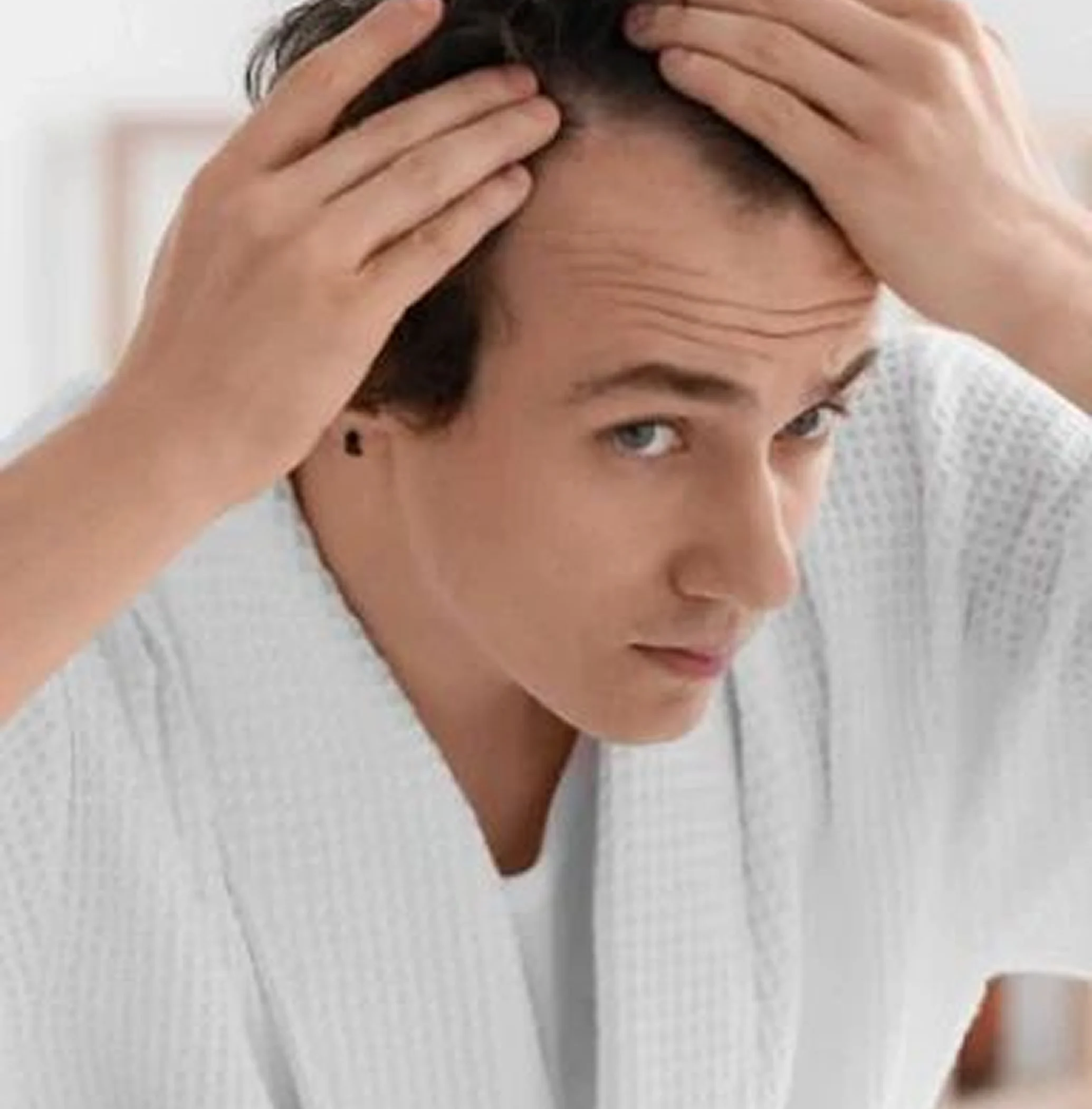
Hair growth depends on healthy follicle signaling, scalp circulation, and internal balance. When those systems are disrupted, hair cycles can shorten, shedding can increase, or regrowth can stall.
Common contributors include:
That’s why effective hair loss treatment starts with understanding the driver, not just addressing the symptom.
We take a structured, individualized approach to hair thinning and shedding—grounded in physiology and long-term scalp health.
Our care model emphasizes:
We support a wide range of hair and scalp concerns, including:
Care is always individualized based on your pattern, history, and goals.
Your treatment plan is designed after a comprehensive consultation and may include:
Not every patient needs the same approach. The goal is targeted support, not unnecessary intervention.

Our hair loss services are appropriate for:
Many patients continue to see a dermatologist for skin disease and choose Venture Wellness for ongoing hair and scalp optimization.

Review of hair history, onset pattern, triggers, lifestyle factors, and prior treatments.

A structured plan designed to support scalp health, follicle signaling, and internal contributors.

Hair growth takes time. Plans are adjusted based on response, tolerance, and evolving needs.
We work alongside your dermatologist, not instead of them. Our role is addressing the hormonal, metabolic, and inflammatory contributors that dermatology isn’t resourced to investigate. Many patients benefit from both, depending on the skin condition being treated.
Hair loss is rarely one thing. Common contributors include hormonal shifts, thyroid dysfunction, nutrient deficiencies, chronic stress, inflammation, and scalp health. Identifying the driver is the first step — treating the symptom alone rarely produces lasting results.
If your shedding increased alongside other symptoms — fatigue, weight changes, mood shifts, skin changes — there’s likely a systemic contributor worth evaluating. A medical assessment will tell you whether the cause is hormonal, inflammatory, nutritional, or structural.
A review of your hair loss pattern, onset, timeline, and prior treatments alongside a clinical assessment of potential contributors. Lab work along with genetic testing may be recommended based on your presentation to identify hormonal, thyroid, or nutritional factors.
Hair growth cycles are slow. Most patients notice reduced shedding within 6–8 weeks of addressing the root cause, with visible density improvement over 3–6 months. Consistency matters more than speed here.
Yes — and we encourage it. Dermatologists are essential for diagnosing and treating scalp and skin disease. Our role is addressing the hormonal, metabolic, and inflammatory contributors they aren’t resourced to investigate. Many patients benefit from both simultaneously.
Not at all. Men experience hormonal, thyroid, and nutrient-related hair loss just as commonly. Our approach is the same regardless of gender — identify the contributor, address it clinically, and support the follicle environment long term.
Posted on Google
Trustindex verifies that the original source of the review is Google.
I absolutely love Venture! It’s such a family atmosphere and so welcoming. I’ve learned so much about my health and feel encouraged. Maria is especially helpful and always waiting for you with a genuine smile ❤️Posted on GoogleI’ve had a wonderful experience with Dr. Julia Montgomery. From the beginning, she took the time to listen to my concerns and develop a personalized plan focused on helping me feel like myself again. I appreciate how comfortable and supported they make me feel during every appointment. They are responsive to my feedback, genuinely care about how I’m feeling, and are willing to adjust my treatment plan based on my symptoms and progress. Rather than taking a one-size-fits-all approach, they work collaboratively with me to find what works best for my body. I’m grateful for their knowledge, compassion, and commitment to helping me improve my overall well-being. I highly recommend them to anyone looking for a provider who truly listens and partners with you on your health journey.Posted on GoogleMaria is the best! Everyone at Venture Wellness is so welcoming and friendly. They put you at ease. Even Miss Cricket who made a special appearance today!Posted on GoogleI am so thankful that I waa able to recently become a patient at Venture Wellness! Dr. Julia and her assistant Maria are so patient, helpful, informative and easy to talk to. I am 50 years old and have not been feeling like myself for quite some time. I knew hormone changes were taking place but I wasn't sure where to turn. Dr. Julia has helped me get back to feeling like myself again, and in some ways, even better. My brain fog is virtually gone, focus is back, energy has returned and I just overall feel so much better! Maria has been a super help as well making sure my labs are done when they are needed and she has helped me several times when I have required additional assistance with questions and support. I am also working with Venture on a small weight loss journey to get back to where I hope to be and with their help I am seeing steady results. In addition to all of the improvement I have seen with my health I also should acknowledge the depth of information about my health that I have learned from Dr. Julia that had never been reviewed with me in the past with my primary. I cannot recommend this practice enough if you are feeling off and want some help so you can feel like yourself again!Posted on GoogleThe knowledge and flexibility she allows with my GLP journey is insanely valuable. For the first time in years, I feel my body healing.Posted on GoogleWorking on hormone issues with Julia. She is kind, compassionate and very thorough. I tell my friends about her services, as hormone replacement therapy is still widely misunderstood and/or treated. Highly recommend her and her team!Posted on GoogleThey take the time and go into detail to review your labs and your health history to make sure you're taking what you need to and nothing mor, nothing less.Posted on GoogleI have been so impressed with the entire team at Venture Wellness. I feel heard, I feel seen and after only a few months I am feeling like my best self again. I am so grateful to Julia for the time and energy she spends with me to truly ensure my personal goals are achieved. Maria is also a pure delight to interact with during labs. The energy is great in general and I feel amazing again at 52! Thank you to the entire VW family.Posted on GoogleI recently started going to Venture and really starting feel a difference. Seeking energy and hormonal balance. Maria is fabulous!!
Venture Wellness · 2342 Colony Crossing Place, Midlothian, VA 23112 · (804) 601-8625
Serving Midlothian, Richmond, Chesterfield County, Bon Air, Powhatan, and Chester.
All treatments are individualized and provided by a licensed medical provider. Results vary based on individual factors.