
Progesterone and Mood: What Your Doctor Isn’t Telling You About Hormonal Balance
Women experience mood and anxiety disorders at twice the rate of men, but many people don’t realize how deeply progesterone affects their mood . The numbers paint a striking picture – about 70% of women notice mood changes during their menopausal transition .
Estrogen has dominated discussions about hormones and mental health over the last several years. The relationship between progesterone and anxiety needs more attention. A woman’s mental health can be significantly affected by changes in progesterone levels throughout her life . These effects become especially noticeable during perimenopause, where women’s risk of developing depressive symptoms increases two to four times .
This piece explores progesterone’s hidden influence on your brain, mood, and mental wellbeing. This vital hormone often gets overlooked in women’s health discussions, even though 80% of women have used hormonal contraception that affects their progesterone levels .
Understanding Progesterone’s Hidden Role in Mental Health
Doctors typically focus on progesterone’s reproductive functions, yet this powerful hormone directly affects our brain chemistry and mental wellbeing. Research now shows progesterone does much more than act as a “pregnancy hormone” – it regulates mood, cognition, and neurological health.
Beyond reproduction: Progesterone in the brain
The entire nervous system feels progesterone’s effects, not just reproductive centers. Scientists have found it in every neural cell type, working through multiple signaling pathways with various receptors [1]. Progesterone transforms into metabolites like allopregnanolone in the brain and interacts with GABA receptors – the same targets that anti-anxiety medications affect [2].
Progesterone protects our nervous system by promoting myelination (the formation of protective nerve coverings) and supports neurogenesis (the growth of new brain cells) [2]. Women face increased risks of anxiety, depression, and cognitive changes when progesterone levels drop during menopause [3].
Why progesterone is often overlooked
UK menopause specialist Dr. Louise Newson states, “Progesterone is the most overlooked and neglected hormone in our bodies” [4]. Estrogen dominates discussions about women’s hormonal health, while progesterone quietly influences brain function just as much.
People often confuse natural progesterone with synthetic progestins found in many contraceptives. This misunderstanding leads to oversight. Natural progesterone converts to allopregnanolone, but synthetic progestins don’t, so they can’t provide the same mood-soothing benefits [5].
The metabolites that matter for mood
Allopregnanolone, progesterone’s main metabolite, works as a potent neurosteroid that deeply affects mood. Most women experience calming effects through GABA receptor modulation [5]. This connection proved significant enough that pharmaceutical companies developed brexanolone, an FDA-approved intravenous allopregnanolone formulation, to treat postpartum depression [6].
Some women have a paradoxical relationship with progesterone and mood. Women with premenstrual dysphoric disorder (PMDD) might react differently to allopregnanolone – they feel increased anxiety and irritability instead of calmness [7]. This “biphasic” response explains why hormonal fluctuations affect women in such different ways.
Signs Your Progesterone Levels May Be Affecting Your Mood
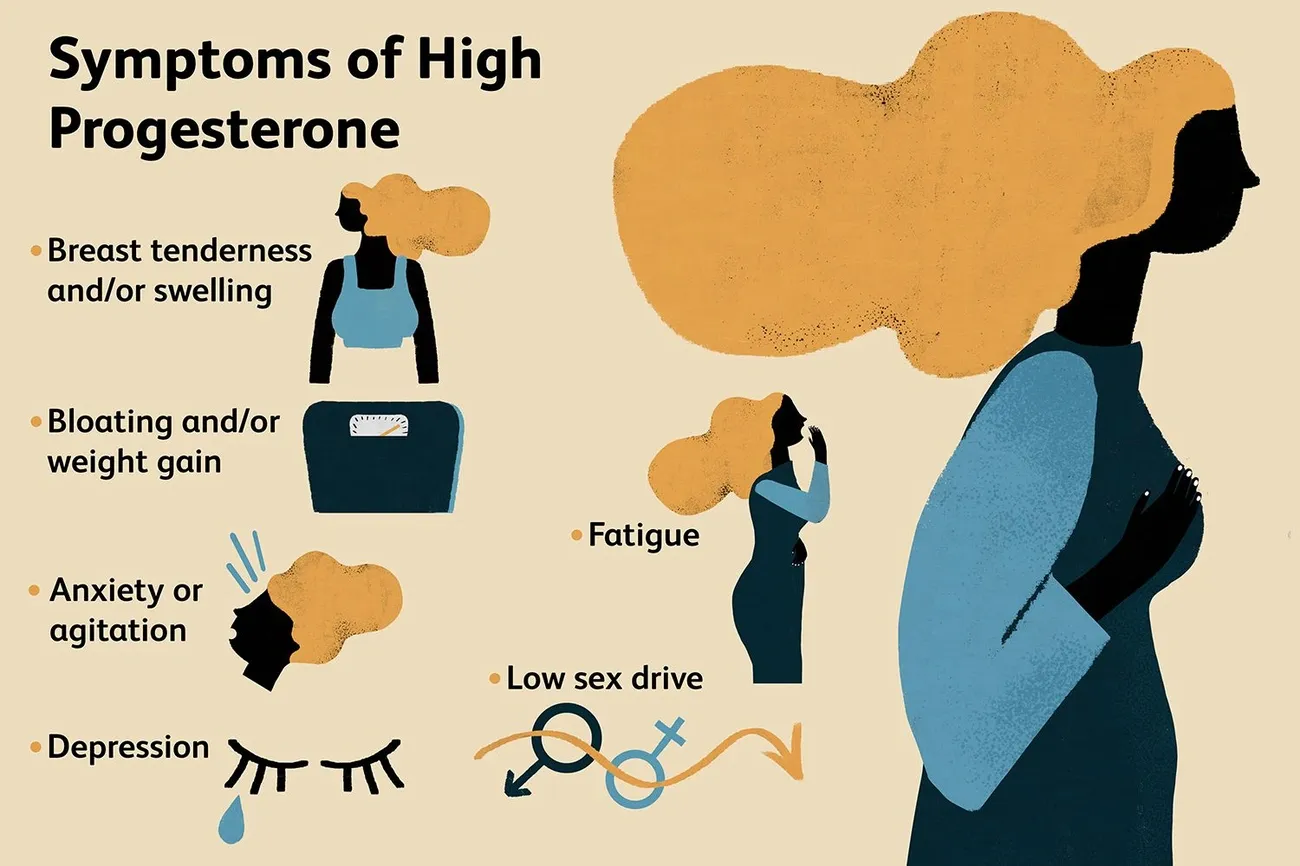
Image Source: Verywell Health
Understanding progesterone’s effect on your mood starts with recognizing its subtle signals. Your hormonal balance might explain those unexplained emotional or cognitive changes you’ve been experiencing.
Anxiety and racing thoughts
Your brain’s primary calming system – GABA receptors – interacts directly with progesterone. Low levels of this hormone often trigger anxiety. Women report feeling restless or having racing thoughts without any clear reason [8]. Progesterone works as your body’s natural anti-anxiety compound, so having too little creates the opposite effect.
Sleep problems and night sweats
Your progesterone levels might be fluctuating if you struggle to fall or stay asleep. This hormone helps you relax and sleep deeper, much like a natural sedative [9]. Poor progesterone levels lead to lighter, disrupted, and less refreshing sleep [10]. On top of that, hot flashes and night sweats affect 80% of women during perimenopause as progesterone drops [11].
Brain fog and memory issues
Hormonal transitions make it harder to remember things and concentrate. Studies reveal that memory issues affect 31% of premenopausal women, compared to 44% of those entering perimenopause [12]. Your verbal memory and executive function take a hit as progesterone declines, which slows down your mental processing [12].
Mood swings and irritability
A progesterone imbalance often causes rapid emotional changes – you might feel fine one moment and irritable the next. Women with premenstrual dysphoric disorder (PMDD) experience stronger mood symptoms not just from low progesterone but from how fast these levels drop [11]. Your brain chemistry changes with this rapid decrease, leading to heightened emotional responses.
Physical symptoms linked to low progesterone
Low progesterone affects more than just your mood. You might experience hormonal headaches and migraines as your progesterone levels decrease [13]. Weight gain, reduced sex drive, breast tenderness, and constant bloating are other common signs [14]. Women trying to get pregnant might struggle because low progesterone makes it harder to maintain pregnancy by not supporting the uterine lining properly [14].
Hormonal Contraception and Mood Changes
Synthetic hormones in contraceptives change brain chemistry differently than natural progesterone. This explains why women often notice mood shifts after they start using hormonal birth control.
Injectable contraceptives and depression risk
Women who use injectable contraceptives with progestogen alone have a higher risk of depression. A detailed Danish study of over one million women showed that progestogen-only contraceptive users were 1.4 times more likely to need antidepressants than non-users [15]. Medroxyprogesterone acetate injections lead to more depressive symptoms compared to non-hormonal options [15]. This happens because synthetic progestins can’t convert into allopregnanolone—the brain metabolite that natural progesterone creates to help calm the mind.
IUDs and emotional side effects
Hormonal IUDs release levonorgestrel (a synthetic progestin) that can affect mood throughout the body, despite being marketed as having mostly local effects. Women who use hormonal IUDs are about 1.4 times more likely to need antidepressant prescriptions [16]. Teens seem to be more sensitive to these effects [17]. Copper IUDs provide a hormone-free option that doesn’t carry these psychological risks [18].
Oral contraceptives: Formulation matters
Depression risk relates directly to the type and amount of progestin in oral contraceptives. Pills with newer formulations containing estradiol or estradiol valerate tend to cause fewer mood problems than older versions [15]. Women taking combination pills report substantial mood changes (12.67% increase in negative affect) during their pill-free week. This suggests that stopping synthetic hormones affects mental health [2].
Why some women experience mood changes while others don’t
Each woman responds differently to contraceptives. Those with personal or family histories of mood disorders are more likely to develop contraceptive-related depression [19]. Age plays a key role—younger women (15-19 years) show greater sensitivity [1]. First-time users face higher depression risks than women who have used hormonal methods before [18]. These factors help explain why about 2.2% of hormonal contraceptive users develop depression compared to 1.7% of non-users [1].
Treatment Options for Progesterone-Related Mood Issues
Understanding progesterone-related mood disorders requires knowledge of targeted treatments available today. These options help address specific conditions throughout a woman’s reproductive life.
Micronized progesterone for perimenopause and menopause
Oral micronized progesterone has transformed treatment for perimenopausal and menopausal mood symptoms. This bioidentical form matches your body’s natural hormone and improves sleep quality by a lot through its action on GABA receptors in the brain [20]. Studies show it reduces night sweats, vasomotor symptoms, and anxiety without increasing breast cancer risk [20]. The optimal relief comes from 300mg taken at bedtime, with research showing 93% completion rates in clinical trials [21].
Allopregnanolone therapy for postpartum depression
Brexanolone, an FDA-approved intravenous allopregnanolone formulation, provides quick relief for postpartum depression [22]. This 60-hour infusion shows immediate improvement, unlike traditional antidepressants that take weeks to work [22]. In spite of that, safety protocols require specialized administration through Risk Evaluation and Mitigation Strategy programs [22].
Hormonal contraception for PMDD
Drospirenone-containing contraceptives are the primary treatment for premenstrual dysphoric disorder. Yaz remains the only FDA-approved birth control specifically for PMDD [3], though other formulations can help by reducing ovarian activity [4]. GnRH analog injections create temporary menopause as an alternative to relieve symptoms [23].
When to avoid progesterone treatments
Progesterone therapy isn’t suitable with:
- Known hypersensitivity (especially peanut allergies with micronized formulations) [24]
- Personal Breast cancer history [24]
- Active thromboembolism [24]
- Liver dysfunction [24]
- Pregnancy [24]
Finding the right approach for your situation
The best treatment depends on your symptoms and whether you’re still ovulating – this determines if cyclic (days 14-28) or continuous administration works better [25]. Start with low doses (100-200mg) and work with a knowledgeable practitioner who can track your progress [25].
Conclusion
Progesterone plays a vital yet often overlooked role in women’s mental health. This powerful hormone does more than just regulate reproduction – it shapes our brain chemistry, mood regulation, and cognitive function. Women experience anxiety and depression at substantially higher rates during hormonal transitions, which directly links to progesterone fluctuations.
Research shows that progesterone’s metabolite allopregnanolone mediates these effects by interacting with GABA receptors. Many women feel calmer during high-progesterone phases. However, those with PMDD might experience worse symptoms.
The signs of progesterone imbalance shouldn’t be dismissed as “just hormones” or “all in our heads.” Sleep problems, anxiety, brain fog, and mood swings can indicate other issues that may need medical evaluation. You should know that synthetic progestins in contraceptives work differently from natural progesterone. These differences explain why some women experience mood changes with hormonal birth control while others don’t notice any effects.
Treatment options have grown substantially. Micronized progesterone helps perimenopausal women, and specialized treatments like brexanolone target postpartum depression through neurosteroid replacement. Women with PMDD can manage their cyclical symptoms with specific contraceptive formulations.
Hormonal balance clearly influences mental wellbeing. Mood disturbances aren’t inevitable parts of womanhood – they’re treatable conditions that deserve proper medical care. Medical education and women’s health discussions need to focus more on the hormone-mental health connection. Understanding our hormones helps us understand ourselves better.
References
[1] – https://www.health.harvard.edu/blog/can-hormonal-birth-control-trigger-depression-201610172517
[2] – https://jamanetwork.com/journals/jamanetworkopen/fullarticle/2809946
[3] – https://www.healthline.com/health/birth-control/birth-control-for-pmdd
[4] – https://pmc.ncbi.nlm.nih.gov/articles/PMC5683150/
[5] – https://www.larabriden.com/progesterone-mood-treat-pmdd/
[6] – https://www.nature.com/articles/s41386-023-01626-z
[7] – https://pmc.ncbi.nlm.nih.gov/articles/PMC8011861/
[8] – https://www.aspect-health.com/blog/can-low-progesterone-cause-anxiety
[9] – https://pmc.ncbi.nlm.nih.gov/articles/PMC10117379/
[10] – https://academic.oup.com/jcem/article/96/4/E614/2720877
[11] – https://www.allarahealth.com/blog/low-progesterone-symptoms
[12] – https://pmc.ncbi.nlm.nih.gov/articles/PMC8394691/
[13] – https://www.mariongluckclinic.com/blog/symptoms-of-low-progesterone.html
[14] – https://my.clevelandclinic.org/health/diseases/24613-low-progesterone
[15] – https://pmc.ncbi.nlm.nih.gov/articles/PMC9218393/
[16] – https://www.healthline.com/health/birth-control/iuds-and-depression
[17] – https://www.orlandohealth.com/content-hub/is-my-iud-making-me-depressed/
[18] – https://flo.health/menstrual-cycle/sex/birth-control/iuds-and-depression
[19] – https://pmc.ncbi.nlm.nih.gov/articles/PMC6838021/
[20] – https://pmc.ncbi.nlm.nih.gov/articles/PMC3987489/
[21] – https://www.endocrine.org/news-and-advocacy/news-room/2018/oral-micronized-progesterone-may-decrease-perimenopausal-hot-flashes-night-sweats
[22] – https://www.nature.com/articles/s41386-023-01721-1
[23] – https://www.mind.org.uk/information-support/types-of-mental-health-problems/premenstrual-dysphoric-disorder-pmdd/treatment-for-pmdd/
[24] – https://www.droracle.ai/articles/752469/what-are-the-absolute-and-relative-contraindications-to-progesterone
[25] – https://drbrighten.com/progesterone-for-perimenopause/
This article is for education and is not medical advice. Medications mentioned here, including compounded medications, are prescribed at Venture Wellness only after evaluation by a licensed provider, and a prescription is never guaranteed. Compounded medications are not FDA-approved. Talk with your own clinician before starting, stopping or changing any medication.